

Air source heat pumps
Will a heat pump keep your home warm? Let's find out honestly.
Heat pumps aren't free, even with a grant – and they aren't right for every home on day one. So we start with a proper heat-loss survey, tell you straight whether yours is a good fit, and design it to run efficiently if it is. No pressure, no over-promising.
You've probably heard both extremes – that heat pumps are the future, and that they leave you cold and out of pocket in an old house. The truth sits in the middle, and it comes down to one thing: design. A heat pump that's been properly sized, with the right radiators and flow temperature, keeps a Yorkshire home warm through winter. One that's been rushed doesn't. Here's how we make sure yours is the first kind.
How it works
Suitability first, one team.
A proper heat-loss survey
We measure how your home actually loses heat, room by room – not a quick look and a quote. This is what tells us, honestly, whether a heat pump suits your home yet.
We design for low-temperature efficiency
The right radiator sizing and flow temperature are what make a heat pump run well – so we design the emitters, not just drop in a box.
We install and commission it
One local team fits the unit, pipework and controls, and handles the paperwork.
Handover, then aftercare you can reach
We show you how to run it efficiently – and you reach the same people afterwards.
The number that matters
SCOP 2.5–3.5 typical · 4.0–4.5 in optimal homes
The number that matters is SCOP – the Seasonal Coefficient of Performance, i.e. how many units of heat you get per unit of electricity across a real heating season (not a lab). A well-installed air-source heat pump typically runs at a SCOP of 2.5–3.5, rising to 4.0–4.5 in well-insulated homes with underfloor heating or generously sized radiators. The trick is low flow temperatures: running at 35–45°C is far more efficient than pushing an old system to 65°C. And older homes aren't ruled out – since April 2026 the EPC insulation roadblock was removed, so solid-wall and Victorian properties (common around Headingley and Roundhay) can qualify, provided the radiators are correctly sized for low-temperature flow. If your home needs some prep first, we'll tell you – that's the honest answer, not a reason to walk away.
These figures are estimates, not a guarantee – actual results depend on your property, energy use and tariff. We'll show you the numbers for your home after a survey. Assumptions: seasonal performance across a real heating season; your figure depends on emitters, insulation and design flow temperature. Source: industry SCOP data – Seasonal Coefficient of Performance, not lab-condition COP. Leeds solar yield of ~850–950 kWh per kWp per year is industry data (MCS irradiance standard MIS 3002 / PVGIS) for an optimally-oriented, unshaded system – not our own measured result.
A view from outside
For a bit of reassurance from outside our own view: in a cold-snap survey run by Octopus Energy, 85% of heat-pump users said they were satisfied with how warm their home stayed, against 80% of gas-heated homes – a useful sign that a well-designed heat pump keeps pace with a British winter. That figure is Octopus's own customer-sentiment data, shared here as attributed context – not a Renewable Leeds result, and not a promise about your home.
Grants, plainly
Government support for heat pumps exists through the Boiler Upgrade Scheme (BUS). It's eligibility-based, not automatic, and the amounts change – so we keep the live figures, dates and rules on our grants page rather than pinning a number here.
See grants & funding, kept currentWhole-home, one team
What a heat pump needs around it.
See it for your home
What might a heat pump cost to run?
Your estimate
Answer a couple of questions to see an estimated range for a home like yours.
Capped at your current electricity spend – an estimate can't save more than you pay.
How we worked this out
Electricity unit rate: 26.11p per kWh – based on the current Ofgem price-cap electricity unit rate (Ofgem energy price cap, 1 Jul – 30 Sep 2026 (announced 27 May 2026); updated 1 July 2026). The cap changes quarterly, so this assumption is refreshed and re-dated when it does.
Solar yield: 850–950 kWh per kWp per year (MCS irradiance standard MIS 3002 / PVGIS, Yorkshire; optimally-oriented, unshaded – industry data, not our measured result). Self-consumption without storage: 30–50%; with a battery: 70–90% (cited industry ranges). Heat-pump efficiency: SCOP 2.5–3.5 typical (Seasonal Coefficient of Performance – real seasonal efficiency, not lab COP), toward 4.0–4.5 with underfloor heating in well-insulated homes.
These figures are estimates, not a guarantee – actual results depend on your property, energy use and tariff. We'll show you the numbers for your home after a survey. Assumptions: typical space-heat + hot-water demand for your property band; SCOP 2.5–3.5 (seasonal efficiency, not lab COP; toward 4.0–4.5 with underfloor heating in well-insulated homes); current Ofgem price-cap unit rate (updated 1 July 2026). Source: Energy Saving Trust-style typical demand bands; industry SCOP data; Ofgem (unit rate). Leeds solar yield of ~850–950 kWh per kWp per year is industry data (MCS irradiance standard MIS 3002 / PVGIS) for an optimally-oriented, unshaded system – not our own measured result.
Honest pricing
Heat-pump cost depends heavily on your home and radiators, so we give a guide, not a headline.
Guide price bands are on their way. We only publish figures that are achievable in practice, so we're confirming them before they go live. Prices shown will be indicative – your firm quote follows a heat-loss survey.
0% VAT applies to qualifying energy-saving materials (solar, battery, heat pumps) until 31 March 2027, after which the reduced rate of 5% applies (HMRC VAT Notice 708/6).
What you can check for yourself
4.7 ★
average Google rating
21
real Google reviews
5
services under one roof
2023
installing since
Members of the Renewable Energy Consumer Code (RECC) – member no. 00077341 – covering solar PV, battery storage and air source heat pumps. MCS certified for solar PV & battery (NAPIT cert NAP/75199/25/2).
Read all 21 reviews →Real installs · Real homes
Our work, as we left it.
Heat-pump install photos are being added from real jobs – we only ever show our own work, never stock imagery.
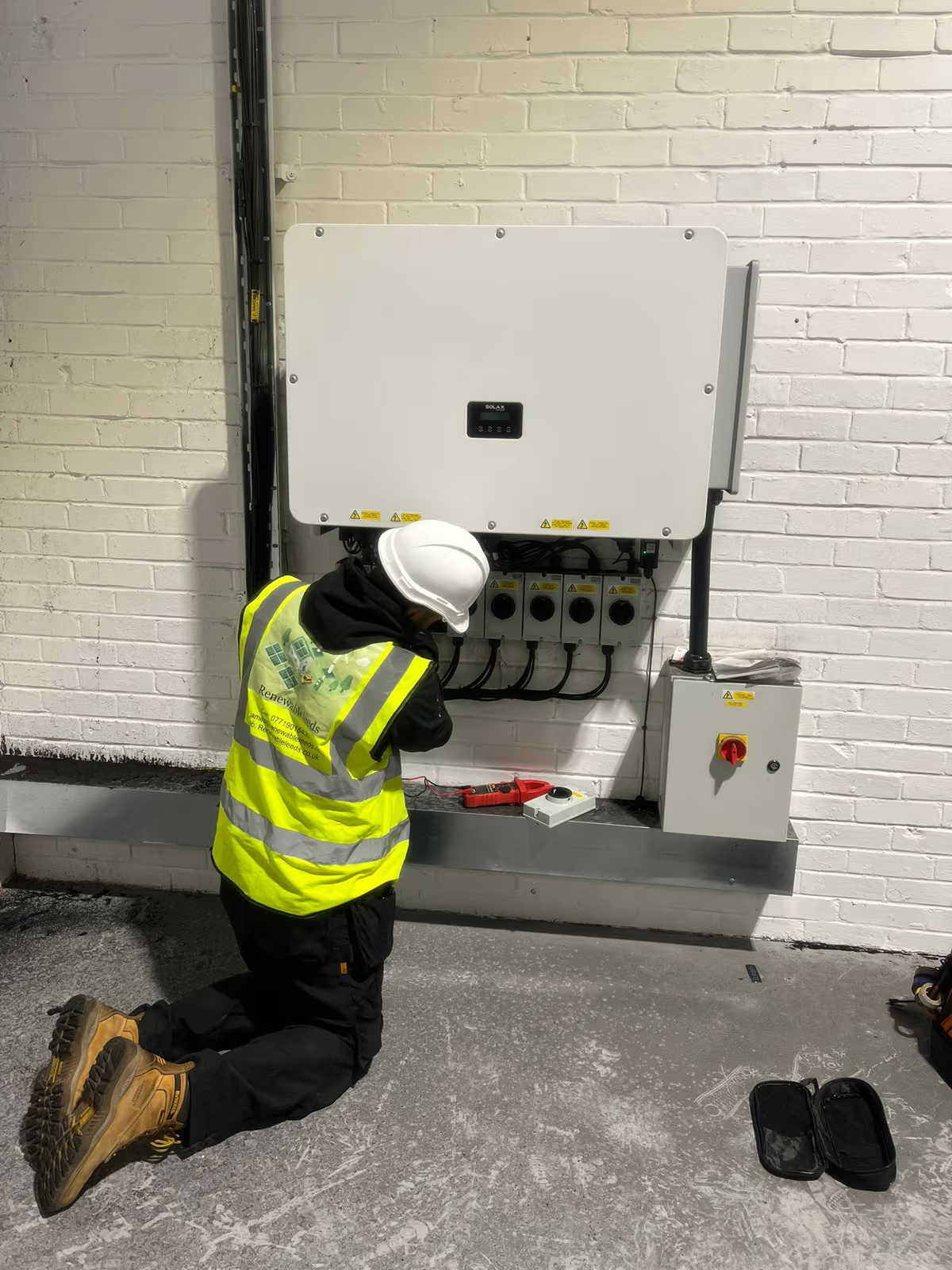
Designed around the house you've actually got.
Straight answers
Questions we hear a lot
Will a heat pump work in my old/solid-wall house?
Often yes – since April 2026 older homes aren't blocked by insulation rules, provided the radiators are sized for low-temperature flow. Our heat-loss survey tells us honestly whether yours is ready or needs a little prep first.
Is a heat pump cheaper to run than my gas boiler?
It can be, but only with the right design – so we won't give you a blanket promise. We'll model your running costs against your current fuel, showing the SCOP and tariff assumptions we've used.
What's SCOP?
Seasonal Coefficient of Performance – how many units of heat you get per unit of electricity across a whole season. Typically 2.5–3.5, higher in well-insulated homes. It's the honest, real-world figure (not the lab COP).
Can I get a grant?
Support exists through the Boiler Upgrade Scheme, but it's eligibility-based, not automatic. We keep the live figures and rules on our grants page.
Is the 0% VAT permanent?
No – 0% VAT applies to qualifying energy-saving materials (solar, battery, heat pumps) until 31 March 2027, after which the reduced rate of 5% applies (HMRC VAT Notice 708/6).
Book a proper heat-loss survey – not a sales visit
Not sure a heat pump's right for you? That's exactly why we survey first.
Book a proper heat-loss survey – not a sales visit. We won't cold-call you.
Step 1 of 5